Types of Synesthesia
Synesthesia is not a phenomenon that manifests itself in one way. In fact, synesthesia can manifest itself in many different forms, as it involves different parts of the human brain. It can range from tasting colors to smelling sounds. Synesthesia can occur between any two senses or perceptual modes. If we take into account only the five basic senses (sight, smell, sound, taste, and touch) and imagine pairings, we already have twenty different types of synesthesia. In reality, there are many more possibilities. Solomon Shereshevsky, a synesthete, reportedly experienced a link between all five of the basic senses. While this is an extreme example, it’s evidence that more than two senses can cross paths.
If you’re an auditory learner, check out this video by Jamie Ward and GoCognitive! It’s worth a watch!
While there are plenty of logically possible combinations, there are several synesthesia types that occur most commonly. Let’s take a look!
Grapheme-Color Synesthesia
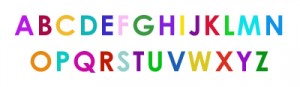
This is one of the most common types of synesthesia. A person who experiences this may associate/see individual letters or numbers with a specific color. Usually, two people won’t report the same color for letters and numbers. However, studies have shown that many synesthetes will see some letters the same way (for example, ‘A‘ is likely to be red).
Sound-to-Color Synesthesia
When sound triggers the visualization of colored, generic shapes, sound-to-color synesthesia is at play. For certain people, the stimuli are limited, and only a few types of sounds will trigger a perception. However, there are cases wherein many different sounds trigger color visualizations. Usually, the perceived colors appear in generic shapes – squares, circles, etc.
Number-Form Synesthesia
A number form is essentially a mental map that consists of numbers. When a person with number-form synesthesia thinks about numbers, a number map is involuntarily visualized. It is sometimes suggested that the number forms are a product of “cross-activation” between regions in the parietal lobe – a part of the brain that is involved in numerical and spatial cognition.
Personification
This type is known as ordinal-linguistic personification, or OLP. An individual who experiences this will associate ordered sequences with various personalities. Ordered sequences may include numbers, letters, months and so on. For example, a person with OLP may look at the letter ‘A’ and think in his mind that ‘A’ is a rude letter. Personally, I think it’s rather amusingly self-deprecating – but that’s just me. Check out Seattle graphic designer, Jesse Jaren’s unique portrayal of ordinal-linguistic synesthesia (shown in the graphic below) in this entertaining and informative blog post. You’ll agree, it’s pretty awesome.

In addition to thinking that certain ordinal sequences have a personality, a synesthete may also imbue a personality within an object. While occurrences have been reported early on, this is a type of synesthesia that has only gained attention from researchers in recent years.
Lexical-Gustatory Synesthesia
Lexical-gustatory synesthesia is one of the more rare synesthesia types. Synesthetes who experience this kind of synesthesia evoke different kinds of tastes when they hear certain words or phonemes. According to research, associations between the words and what a synesthete is able taste are constrained by tastes he or she has experienced early in life. So, if an individual hasn’t had mashed potatoes or bacon, they won’t be tasting those flavors as a result of this variation. What a shame!
Again, these are just some of the more commonly reported forms. If you have questions about personal experiences (be they similar or disimilar to those above), feel free to contact us! We’ll do our best to respond in a timely and informative fashion!